Professional manufacturer with the design, development and production of rubber and plastic machinery

The Evolution of Banbury Mixers in the Rubber Industry: A Comprehensive Analysis
Apr 18,2026
The Evolution of Banbury Mixers in the Rubber Industry
Table of Contents
1. Introduction to Banbury Mixers
2. The Historical Background of Banbury Mixers
3. Key Features of Modern Banbury Mixers
4. The Role of Banbury Mixers in Rubber Processing
5. Innovations in Banbury Mixer Technology
6. Benefits of Using Banbury Mixers in the Rubber Industry
7. Challenges Faced by Banbury Mixers
8. Future Trends in Banbury Mixer Technology
9. Frequently Asked Questions (FAQs)
10. Conclusion
1. Introduction to Banbury Mixers
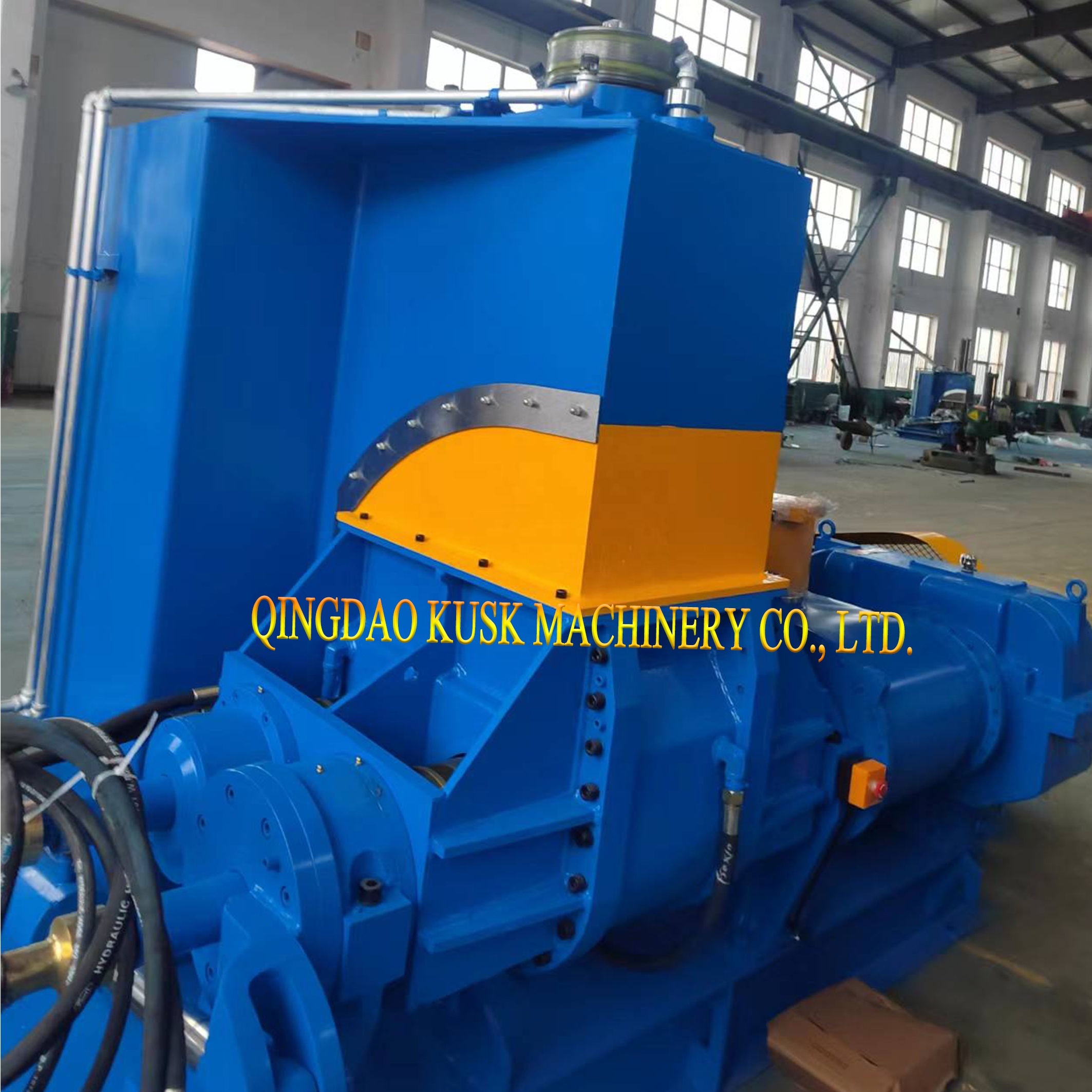
Banbury mixers have long been a cornerstone in the rubber manufacturing process. These powerful machines are designed for mixing, kneading, and compounding rubber materials, ensuring that the end product meets stringent quality standards. With their robust design and advanced capabilities, Banbury mixers have evolved significantly over the years, adapting to the changing needs of the rubber industry.
2. The Historical Background of Banbury Mixers
The origins of Banbury mixers can be traced back to the early 20th century. Invented by Frederick Banbury in 1916, the mixer revolutionized the rubber industry by offering an efficient method for blending various materials. The initial designs were relatively simple, focusing on increasing production efficiency. As industries grew and the demand for diverse rubber products heightened, Banbury mixers underwent significant advancements in design and functionality.
2.1 The Early Years
During the early years of their introduction, Banbury mixers primarily served the burgeoning automotive industry, where they were crucial in producing tires and other rubber components. Their ability to handle large volumes of material with precision set them apart from traditional mixing methods, leading to widespread adoption.
2.2 Technological Advancements
Throughout the decades, Banbury mixers have incorporated various technological advancements, including improved heating and cooling systems, enhanced mixing blades, and automation features. These developments have significantly improved mixing efficiency, consistency, and the overall quality of the final products.
3. Key Features of Modern Banbury Mixers
Modern Banbury mixers are equipped with several innovative features that enhance their performance in the rubber industry.
3.1 High-Performance Mixing Blades
The mixing blades in contemporary Banbury mixers are designed for optimal performance. With varying shapes and configurations, they facilitate effective material dispersion and reduce mixing times, ultimately leading to higher output.
3.2 Advanced Control Systems
Today’s Banbury mixers feature sophisticated control systems that allow operators to monitor and adjust mixing parameters in real-time. This capability ensures consistency and quality are maintained throughout the mixing process.
3.3 Energy Efficiency
Modern designs focus on energy efficiency, utilizing technologies that minimize energy consumption while maximizing output. This not only reduces operational costs but also aligns with global sustainability goals.
4. The Role of Banbury Mixers in Rubber Processing
Banbury mixers play a vital role in various stages of rubber processing. They are primarily involved in compounding, where raw rubber is mixed with additives to enhance its properties.
4.1 Compounding Process
In the compounding process, materials such as carbon black, oils, and chemical accelerators are added to the rubber to achieve desired characteristics. The precise mixing capabilities of Banbury mixers ensure uniformity in the compound, which is crucial for producing high-quality rubber products.
4.2 Batch vs. Continuous Mixing
Banbury mixers can operate in both batch and continuous modes. Batch mixing is ideal for smaller production runs, while continuous mixing suits large-scale operations, allowing for a seamless transition between mixing and processing stages.
5. Innovations in Banbury Mixer Technology
The advancements in Banbury mixer technology have forged a new path for the rubber industry.
5.1 Incorporation of Automation
Automation has become a game-changer in the operation of Banbury mixers. Automated systems reduce the need for manual intervention, improving safety, consistency, and productivity.
5.2 Integration with Industry 4.0
The blending of Banbury mixers with Industry 4.0 technologies, such as IoT and data analytics, allows for smart manufacturing processes. This integration enables real-time monitoring and predictive maintenance, thus reducing downtime and increasing efficiency.
6. Benefits of Using Banbury Mixers in the Rubber Industry
The advantages of utilizing Banbury mixers in rubber processing are manifold.
6.1 Improved Quality Control
One significant benefit is the enhanced quality control achieved through precise mixing and automation. Consistent product quality leads to increased customer satisfaction and reduced waste.
6.2 Cost-Effectiveness
While the initial investment in a Banbury mixer can be substantial, the long-term cost savings from increased efficiency and reduced material wastage often outweigh initial expenses.
7. Challenges Faced by Banbury Mixers
Despite their numerous benefits, Banbury mixers are not without challenges.
7.1 Maintenance Requirements
Regular maintenance is essential to ensure optimal performance. Operators must be trained to identify potential issues and perform routine checks to avoid costly downtimes.
7.2 Adaptability to New Materials
As the rubber industry continues to evolve, Banbury mixers must adapt to new materials and formulations. This adaptability can be a challenge, necessitating ongoing research and development.
8. Future Trends in Banbury Mixer Technology
Looking ahead, several trends are poised to shape the future of Banbury mixers in the rubber industry.
8.1 Sustainable Practices
The push towards sustainability will drive innovations in Banbury mixer designs, focusing on energy efficiency and the use of eco-friendly materials and processes.
8.2 Enhanced Customization
As customer demands become more specific, the need for customized mixing solutions will grow. Future Banbury mixers are expected to offer greater flexibility to accommodate a wider range of formulations.
9. Frequently Asked Questions (FAQs)
9.1 What is a Banbury mixer?
A Banbury mixer is a type of internal mixer used primarily in the rubber industry for mixing, kneading, and compounding rubber materials.
9.2 How does a Banbury mixer work?
Banbury mixers operate by using rotating blades to mix materials at high temperatures, ensuring uniformity and consistency in the final product.
9.3 What are the advantages of using Banbury mixers?
The advantages include improved mixing efficiency, enhanced quality control, energy savings, and the ability to handle large volumes of materials.
9.4 Are Banbury mixers suitable for all types of rubber compounds?
While Banbury mixers are versatile, their suitability can depend on specific material properties and processing requirements.
9.5 What maintenance is required for Banbury mixers?
Regular maintenance includes checking mechanical components, monitoring for wear and tear, and ensuring the mixing chamber is clean and free of contaminants.
10. Conclusion
The evolution of Banbury mixers has been a testament to the advancements in the rubber industry. From their humble beginnings to their current high-tech incarnations, these machines have continuously adapted to meet the demands of modern manufacturing. As technology continues to progress, Banbury mixers will undoubtedly play a crucial role in shaping the future of rubber processing, contributing to enhanced product quality and operational efficiency. The ongoing innovations promise an exciting future for rubber manufacturers, ensuring that they remain at the forefront of the industry.
Hot Tags:
PREVIOUS:

Contact Us
E-mail:
tender701@gmail.com
tender701@163.com
Phone/WhatsApp:
+86 137 9243 6835
Address:
Huangshan Economic Zone, Huangdao, Qingdao,China
