Professional manufacturer with the design, development and production of rubber and plastic machinery

Banbury Mixers vs. Traditional Rubber Mixing Methods: A Comprehensive Comparison
Mar 09,2026
Banbury Mixers vs. Traditional Rubber Mixing Methods: A Comprehensive Comparison
Table of Contents
- Introduction to Rubber Mixing Techniques
- Understanding Banbury Mixers
- Traditional Rubber Mixing Methods
- Comparing the Two Methods
- Case Studies: Real-World Applications
- The Future of Rubber Mixing Techniques
- Conclusion
- Frequently Asked Questions
Introduction to Rubber Mixing Techniques
In the rubber manufacturing industry, **mixing techniques** play a pivotal role in determining the quality and properties of the final product. The choice between **Banbury Mixers** and traditional rubber mixing methods can significantly influence production efficiency, consistency, and material properties. In this article, we will explore the unique characteristics of both methods and provide insights into which might be more suitable for specific applications.
Understanding Banbury Mixers
Banbury Mixers have revolutionized the rubber processing landscape since their inception. These machines, designed for intense mixing and kneading, are at the forefront of modern rubber manufacturing.
How Banbury Mixers Work
The Banbury Mixer operates on the principle of **internal mixing**, where materials are fed into a closed chamber containing two counter-rotating rotors. These rotors create a powerful shear force that homogenizes the rubber compounds effectively. The main features include:
- **Closed Mixing Chamber**: This design minimizes air exposure, reducing the risk of oxidation and contamination.
- **High Shear**: The rotors generate high shear forces, enabling thorough mixing in a shorter duration.
- **Temperature Control**: Many Banbury Mixers come with integrated temperature control systems, allowing the operator to maintain optimal processing temperatures.
Advantages of Banbury Mixers
The use of Banbury Mixers in rubber processing offers several advantages:
1. **Efficiency**: The closed system allows for faster mixing cycles, significantly increasing production rates.
2. **Consistency**: The uniform shear and temperature control contribute to consistent product quality.
3. **Versatility**: Banbury Mixers can process a wide variety of rubber compounds, accommodating various formulations.
4. **Reduced Labor Costs**: Automation features in modern Banbury Mixers can reduce the need for manual intervention, decreasing labor costs.
Disadvantages of Banbury Mixers
Despite their many benefits, Banbury Mixers do have some drawbacks:
1. **High Initial Cost**: The cost of purchasing and maintaining a Banbury Mixer is significantly higher compared to traditional methods.
2. **Energy Consumption**: The high-energy requirements for operation may lead to increased operational costs.
3. **Complexity**: The sophisticated technology can require specialized training for operators.
Traditional Rubber Mixing Methods
Traditional rubber mixing methods include techniques such as open mill mixing and batch mixing. These approaches have been utilized for decades and continue to serve notable functions in the industry.
How Traditional Methods Work
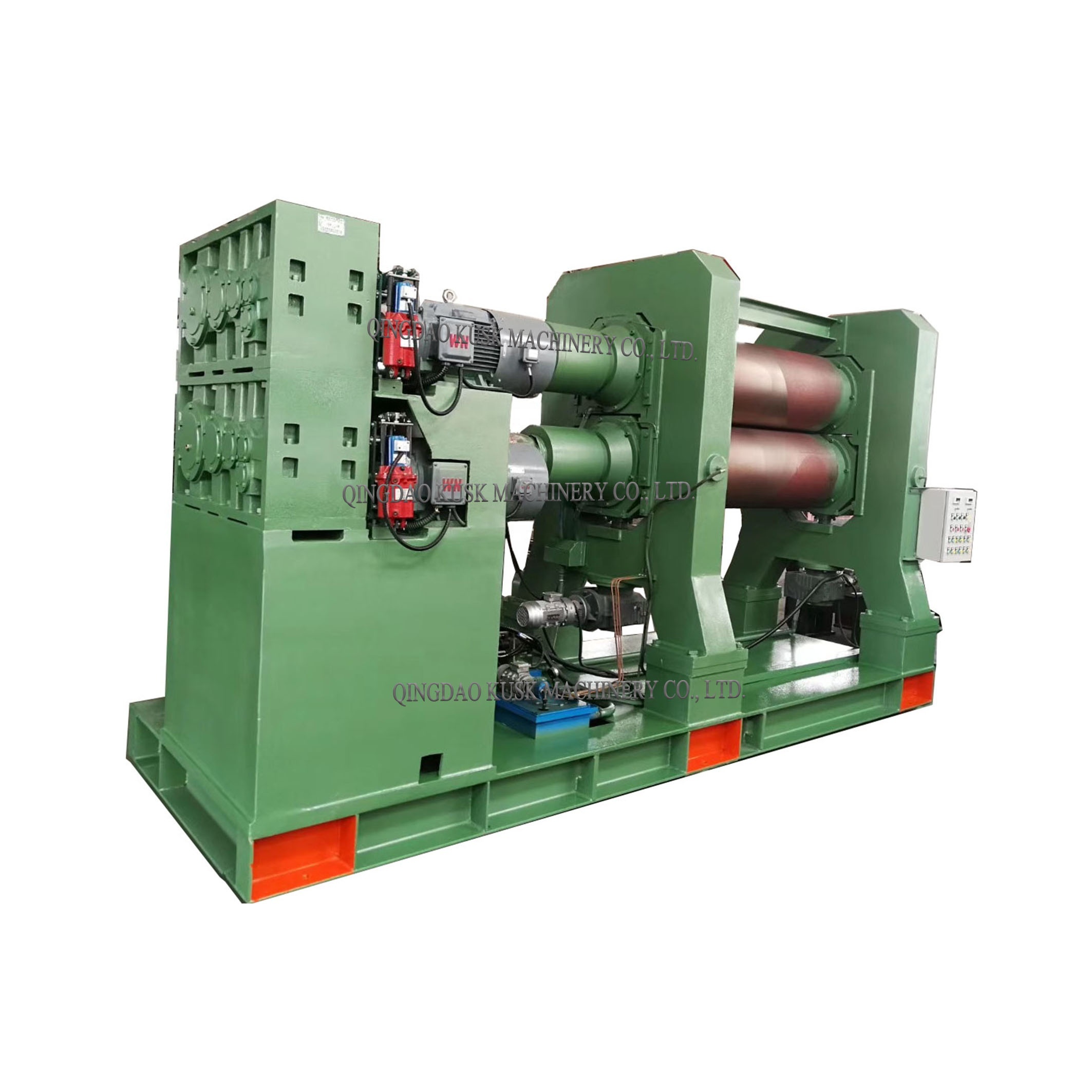
**Open mill mixing** involves passing rubber material between two counter-rotating rolls, where the shear forces help blend various components. **Batch mixing**, on the other hand, typically takes place in a semi-open environment, where materials are manually added and mixed in batches.
Advantages of Traditional Methods
Traditional methods hold their own advantages, including:
1. **Lower Initial Investment**: The cost of equipment is generally lower than that of Banbury Mixers.
2. **Simplicity**: The straightforward design makes traditional methods easier to operate and maintain.
3. **Flexibility**: For small-scale operations, traditional methods can be more adaptable to custom formulations.
Disadvantages of Traditional Methods
However, there are notable disadvantages associated with traditional rubber mixing methods:
1. **Longer Mixing Times**: Achieving a homogeneous mix can take considerably longer than with a Banbury Mixer.
2. **Inconsistent Quality**: Variability in manual processes can lead to inconsistent product characteristics.
3. **Higher Labor Costs**: Increased manual intervention can raise labor expenses and limit production scalability.
Comparing the Two Methods
When comparing Banbury Mixers to traditional rubber mixing methods, several factors must be taken into account:
- **Efficiency**: Banbury Mixers provide superior efficiency with faster mixing cycles and reduced production times.
- **Quality Consistency**: The level of control in Banbury Mixers ensures consistent product quality, which is often harder to achieve with traditional methods.
- **Scalability**: For large-scale production, Banbury Mixers are better suited due to their automated features and speed.
- **Cost Considerations**: While Banbury Mixers incur higher upfront costs, the long-term savings through reduced labor and energy consumption can offset this.
Case Studies: Real-World Applications
To illustrate the practical applications of these mixing methods, let’s consider a couple of case studies:
**Case Study 1: Automotive Rubber Components**
A major automotive parts manufacturer transitioned from traditional mixing methods to Banbury Mixers. They reported a 30% increase in production efficiency and a marked improvement in product quality. The ability to maintain consistent temperatures during mixing led to better polymer properties and enhanced durability of rubber components.
**Case Study 2: Specialty Rubber Products**
A company specializing in custom rubber formulations used traditional methods for years. After evaluating the costs associated with labor and inconsistent quality, they invested in Banbury Mixers. This switch enabled them to expand their product offerings while improving turnaround times, ultimately resulting in greater customer satisfaction.
The Future of Rubber Mixing Techniques
As technology continues to evolve, the future of rubber mixing techniques is likely to see further advancements. Innovations in automation, energy efficiency, and materials science will shape new mixing machines that integrate the best aspects of both Banbury and traditional methods. Moreover, **sustainability** will drive the development of more eco-friendly processes, making the rubber mixing industry greener and more efficient.
Conclusion
In summary, the choice between **Banbury Mixers** and traditional rubber mixing methods hinges on various factors, including production scale, budget constraints, and desired product quality. While Banbury Mixers offer advanced capabilities and efficiencies, traditional methods still hold relevance, particularly for smaller operations or specific applications. Understanding the strengths and weaknesses of each method is crucial for manufacturers seeking to optimize their rubber processing capabilities.
Frequently Asked Questions
1. What is a Banbury Mixer?
A Banbury Mixer is a type of internal mixer used in the rubber industry that features two counter-rotating rotors within a closed chamber, allowing for efficient mixing of rubber compounds.
2. How does a Banbury Mixer work?
The Banbury Mixer operates by feeding rubber materials into a closed mixing chamber, where the rotors create shear forces that mix and knead the compounds effectively while maintaining controlled temperatures.
3. What are the main advantages of using Banbury Mixers?
Advantages include higher efficiency, consistent product quality, versatility in mixing various formulations, and reduced labor costs due to automation.
4. Are traditional rubber mixing methods still relevant?
Yes, traditional methods like open mill mixing are still widely used, especially in smaller operations or for specific applications where customization is needed.
5. Which method is more cost-effective in the long run?
While Banbury Mixers have a higher initial investment, they often result in lower operational costs over time due to increased efficiency, reduced labor, and energy savings.
This comprehensive examination of Banbury Mixers and traditional rubber mixing methods provides a clear understanding of the benefits and drawbacks of each, helping manufacturers make informed decisions about their rubber processing strategies.
Hot Tags:
PREVIOUS:

Contact Us
E-mail:
tender701@gmail.com
tender701@163.com
Phone/WhatsApp:
+86 137 9243 6835
Address:
Huangshan Economic Zone, Huangdao, Qingdao,China
